One Sprinkler Saved a Neighbourhood. A Nation Full of Burning Homes Still Has No System to Reward That.
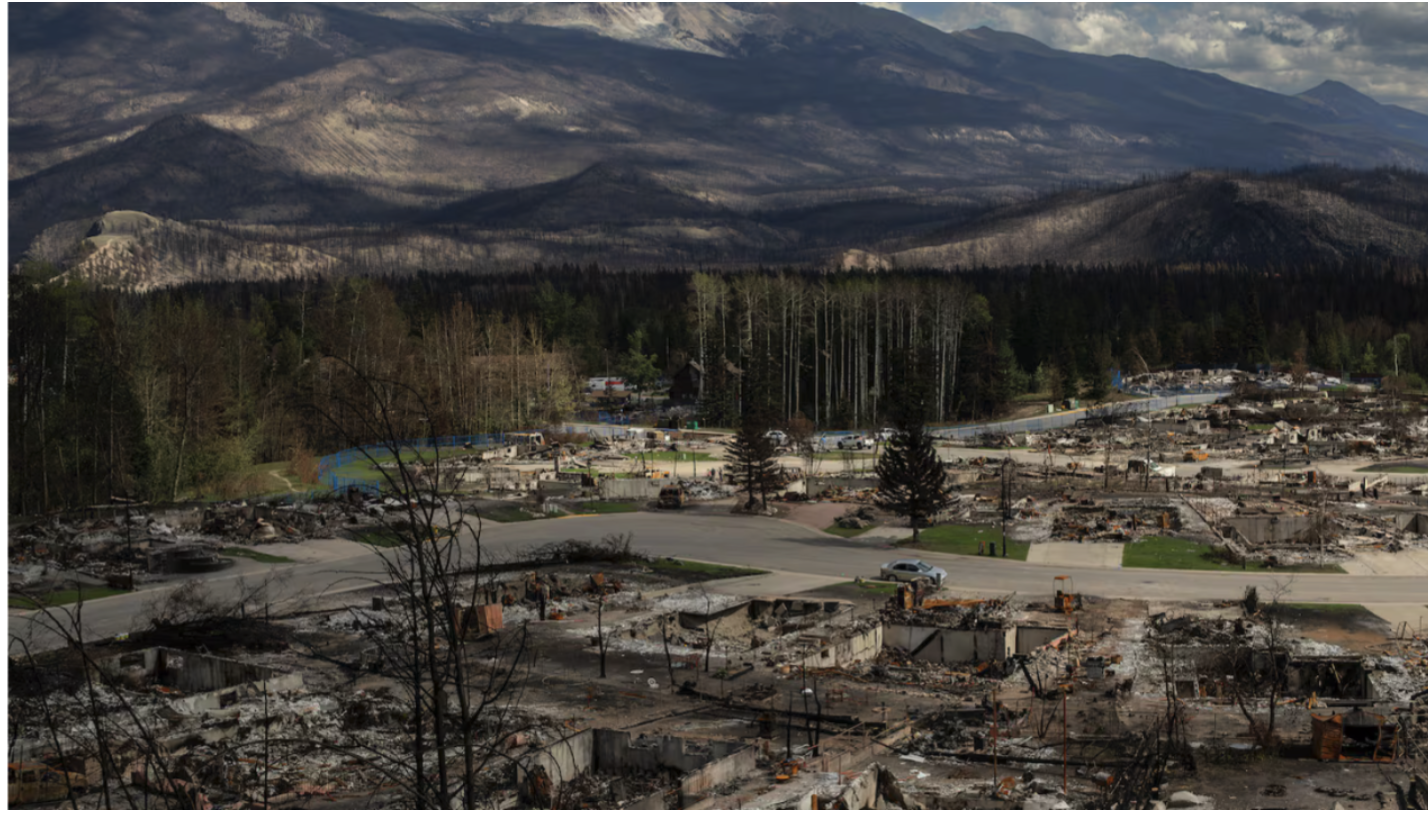
Lee Declercq hosed down his roof for two days and saved his street from the Jasper fire. A year later, BC and Ontario are proving his story wasn't the exception Canada can afford to keep treating it as.
By James Riley, CEO, Lightspark Software Inc.
As this is published, the fires are still burning. In British Columbia's Interior, the Okanagan Indian Band estimates at least 200 homes have already been destroyed on its reserves by the Bradley Creek wildfire, with roughly another 120 properties confirmed to have lost structures near Clinton, and multiple fire complexes — including the 406-square-kilometre Ainslie Creek fire and the growing Brunswick Creek and Quilpituk Creek fires — still active and, in some cases, still expanding daily. In northwestern Ontario, 113 wildfires remain active as of this week, with 14 communities evacuated over the season, in what officials say is already the province's worst wildfire season on record by area burned. Final home-loss counts for both regions are still being assessed.
On July 22, 2024, as the Jasper wildfire bore down on the townsite, Lee Declercq did something that would later be credited with saving not just his own house, but the homes around it. He hauled a ladder to the side of his property, climbed the steep roofline, and switched on a rooftop sprinkler. Then he left it running — non-stop, for two days — as roughly 5,000 residents and 20,000 visitors evacuated the area.
When the fire reached town, it destroyed a third of Jasper's structures. But Declercq's "wooden matchstick" of a home, as he calls it, was still standing. So were four houses next to it — a cluster residents now half-jokingly call the "Republic of Stone Mountain," because it's one of the only pockets of the old neighbourhood left intact.
Jasper Fire Chief Mathew Conte has been direct about why. Declercq's continuous soaking kept the property moist enough to resist ignition, and a volunteer-run sprinkler line strung around the edge of that neighbourhood, combined with a fortunate wind shift, kept the flames from spreading through the block. Conte has said plainly that if Declercq's home had caught fire and the flames had jumped from there, the entire neighbourhood would likely have been lost.
Their property was pretty moistened by their sprinklers.
— Mathew Conte, Jasper Fire Chief
One family's decision to wet down their property didn't just save their own home. It changed the outcome for their neighbours.
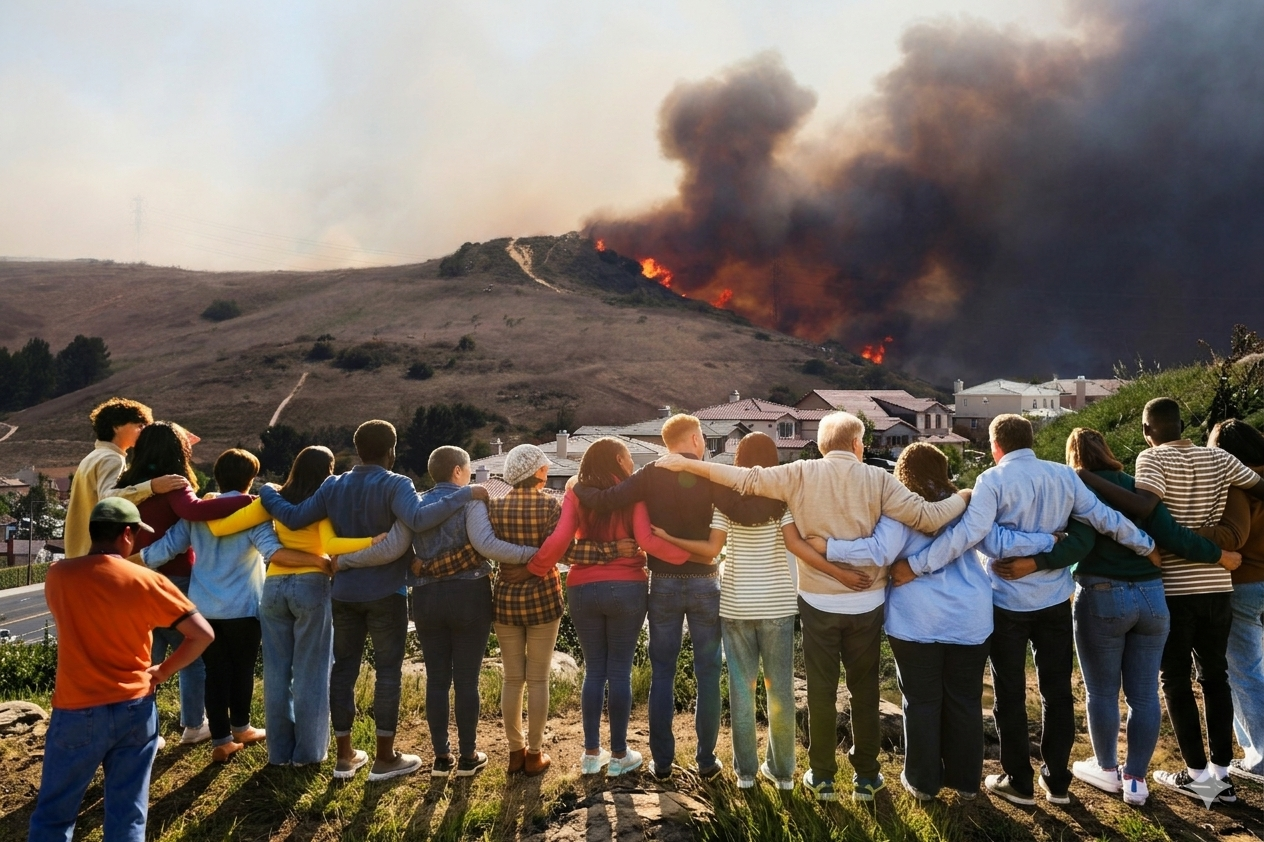
The Uncomfortable Truth About Home Hardening
Declercq's home survived a wildfire that levelled a third of a town — using a garden-variety rooftop sprinkler and two days of persistence. That's the story insurers, governments, and homeowners in fire-prone regions across Canada need to sit with, because it points to something the industry has been slow to act on: most of the technology that prevents a home from burning already exists, is not expensive by wildfire-rebuild standards, and simply isn't deployed at scale.
The categories are well established:
- •Passive fire protection — non-combustible siding, ember-resistant vents, and firestop sealants that keep flame and embers from ever finding a way in. Largely "install once" measures baked into the building envelope.
- •Active fire suppression — residential sprinkler systems, concealed sprinkler heads, and water-mist systems that activate automatically or manually when a fire threat is detected.
- •Exterior wildfire defense — roof-mounted sprinkler kits, perimeter sprinkler-and-foam systems, and portable suppression units built specifically for the kind of last-mile defense Declercq improvised with a garden hose and a ladder.
None of this is speculative. It's the same category of product that, deployed almost by accident on one property in Jasper, is now credited with saving a cluster of homes that would otherwise be gravel lots today.
The gap isn't invention. It's adoption — and that's a policy and financing problem as much as a product one.
Why This Can't Be Left to Individual Homeowners
Declercq's outcome worked because he happened to have a rooftop sprinkler, happened to be willing to climb onto a steep roof during an active evacuation order, and happened to get a favourable wind shift. That is not a resilience strategy. That is luck wearing the costume of preparedness.
A neighbourhood shouldn't depend on one household's improvisation to survive a wildfire. It should depend on baseline standards — for siding, vents, sealants, and suppression systems — that are funded, insured for, and enforced before the fire starts, not rebuilt after the fact at full replacement cost.
This is where the policy conversation has to catch up to the product conversation.
This Isn't Hypothetical — It's Happening Right Now
While Jasper is the story with the clearest before-and-after, it's not the one to build policy around in hindsight. As of this week, Canada has hundreds of wildfires burning, with British Columbia and Ontario the hardest hit.
In the BC Interior, the Bradley Creek wildfire has destroyed at least 200 homes on the Okanagan Indian Band's reserves near Vernon, according to preliminary band estimates. Nearby, the Pear Lake wildfire near Clinton has forced evacuation orders across about 1,500 properties in the Thompson-Nicola Regional District, with roughly 120 more properties confirmed to have lost structures.
In northern Ontario, fires have burned through more than 7,250 square kilometres of forest this season — a new provincial record — and 113 wildfires remain active in the northwest region as of this week. Fast-moving fires destroyed homes and buildings on Namaygoosisagagun (Collins) First Nation, where the chief said residents fled on boats as flames reached the trees next to their houses. Fourteen communities have been evacuated over the season, with roughly 1,800 residents displaced at the peak.
Many of our people ran out of their houses with only the clothes on their back.
— Chief Helen Paavola, Namaygoosisagagun (Collins) First Nation
Neither fire season is finished, and neither region has a final count of homes lost. That's precisely the point: the destruction is still being tallied in real time, in a country that still has no operational federal flood insurance program and no mechanism linking wildfire mitigation to insurance pricing. The Jasper story shows what one hardened home can do. BC and Ontario, right now, are showing what happens to the homes that weren't.
What the Jasper Fire Actually Cost — And Why That Number Should Change Policy
The Jasper wildfire wasn't a local anomaly. It was one of four events that, in under 30 days in the summer of 2024, pushed Canada to its worst insured-loss year on record: $8.55 billion, roughly 12 times the 2001–2010 annual average. Jasper alone accounted for $1.1 billion in insured losses and now ranks as the ninth-costliest disaster in Canadian history.
That's the backdrop for a new framework I've been working on, the Canada Climate Resilience Framework, which argues Canada's wildfire and flood policy has been solving for the wrong problem. Most jurisdictions have been asking how to keep insurance available at all — a question that tends to produce mandatory risk pools, stricter building codes, and pricing penalties, tools that share one common drawback: homeowners don't benefit. Premiums keep climbing regardless: Alberta homeowners have seen a 90% cumulative increase over ten years, Ontario 84%, national average 31%.
The better question is how to reduce climate losses while keeping insurance affordable — which points toward rewarding the kind of mitigation that saved the Declercq home, rather than only pricing around the risk of losing it.
The Canadian Home Resilience Standard (CHRS)
The centerpiece of the framework is a proposed national standard, modeled on the existing EnerGuide energy rating system, that would score every home across five dimensions — energy, carbon, flood, fire, and wind — and roll them into a single composite Resilience Score. A home's Fire Score would reflect its wildfire interface and defensible space: exactly the kind of readiness reflected in passive protection (non-combustible siding, ember-resistant vents, firestop sealants) and active suppression (rooftop and perimeter sprinkler systems, water-mist systems) products already on the market.
The idea is to give insurers, lenders, municipalities, and homeowners one shared number and one shared language for a property's resilience — something none of them currently have. Read the CHRS Lightspark Proposal here.
An Incentive Engine, Not Just a Mandate
Rather than legislating hardening requirements, the framework proposes an incentive engine that ties verified upgrades to real financial rewards. A fire-resistant roof earns 250 points, defensible space 150 points, a backwater valve 200 points; homeowners who accumulate points become eligible for insurance discounts, mortgage rate discounts, property tax rebates, and federal grants. In one illustrative example, a homeowner starting at a $3,200 annual premium who installs a heat pump, backwater valve, and roof upgrade could see that premium drop to roughly $2,100 — an estimated $11,000 in savings over ten years.
Lightspark Software has Fire, Wind and Flood Scores for every home in Canada, alongside a Fire Mitigation Product Catalog and software designed to help Canadians future proof their homes.
On the insurer side, government would offer access to national resilience data, a federal catastrophe reinsurance backstop, and reduced capital reserve requirements — in exchange for insurers passing verified premium discounts back to homeowners and sharing portfolio-level resilience data with government.
Where the Federal Government and the Insurance Bureau of Canada Fit In
Government shouldn't run this system directly — it should convene it. That means Ottawa acting as standards-setter for the CHRS methodology, funding the underlying property data infrastructure, catalyzing low-interest retrofit financing and grants, backing a catastrophe reinsurance layer, and measuring outcomes over time.
For the Insurance Bureau of Canada specifically, the country scorecard is pointed: Canada currently sits in Tier C, alongside Germany, while the UK, Australia, and Japan sit in Tier A. The UK's Flood Re program funds up to £10,000 per claim toward resilient rebuilding, and roughly 80% of claimants who used those funds cut their premiums by more than half. Canada's comparable federal flood insurance program was promised in 2021 and is still not operational, and existing initiatives like FireSmart carry no link to premium discounts at all — mitigation spending and insurance pricing currently operate in separate silos.
This is the gap the Jasper story makes visible at the scale of a single house: the tools to prevent the loss already exist, a family used them successfully with no formal program behind them, and Canada still has no national mechanism connecting that kind of mitigation to the insurance and financing system that would make it standard practice rather than improvisation. The alternative isn't neutral — it's several billion dollars a year in real estate that keeps burning while the system spends after the fact instead of hardening in advance.
The Real Choice
The Jasper story is often told as a piece of luck — a stubborn homeowner, a well-timed wind shift, a sprinkler nobody was sure would matter. But strip away the drama and it's a controlled demonstration of a simple proposition: keep a structure wet and shielded long enough, and it survives a fire that destroys everything around it.
The products exist. The Jasper outcome proves the concept at the scale of one home and its neighbours. What's missing is the policy and financing architecture to make hardened homes the default — not the exception one family stumbled into by climbing onto their own roof at the worst possible moment.
Turn property risk into a mitigation strategy.
Lightspark helps insurers understand fire, wind and flood exposure at the property level — and helps policyholders make the improvements that reduce it.
Learn MoreDon’t just identify climate risk. Help homeowners reduce it.
HomeIQ and HorizonIQ help insurers understand the property and its climate exposure. Engage gives policyholders a personalized pathway to make their homes more resilient.
Learn More